
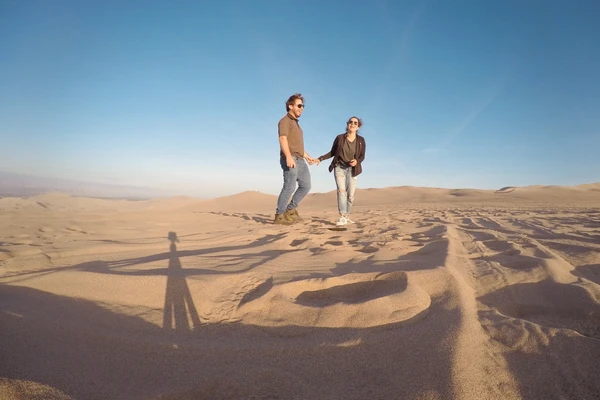
Most visitors to Abu Dhabi spend their time on the island. The Grand Mosque, the Corniche, Saadiyat, Yas Island. All of them worth visiting. But one hour south-east of the city, in the open desert that most tourists never reach, there are two places that have stayed with me longer than almost anything else I know in this region.
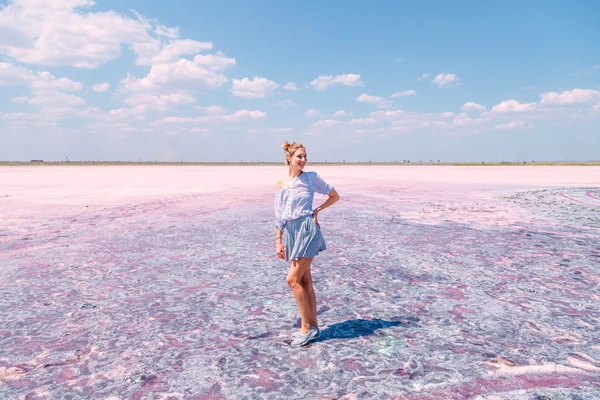
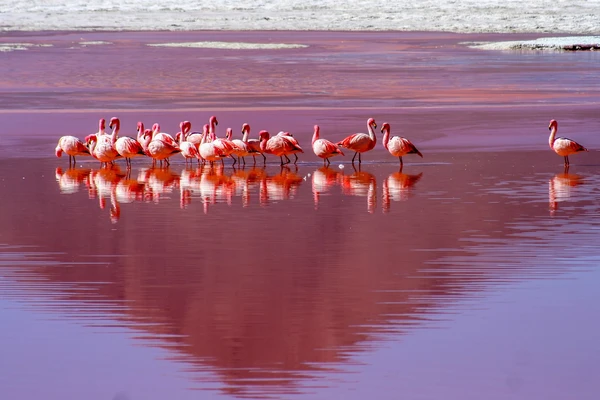
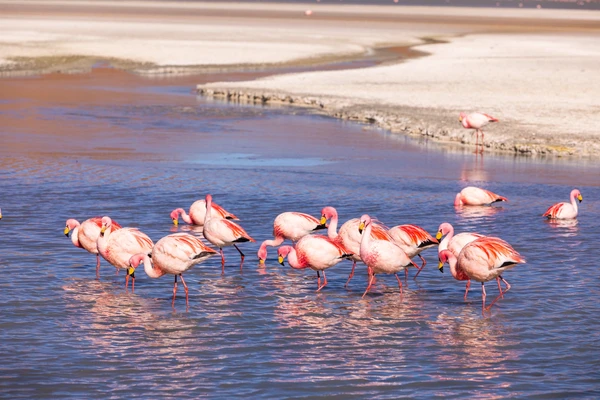
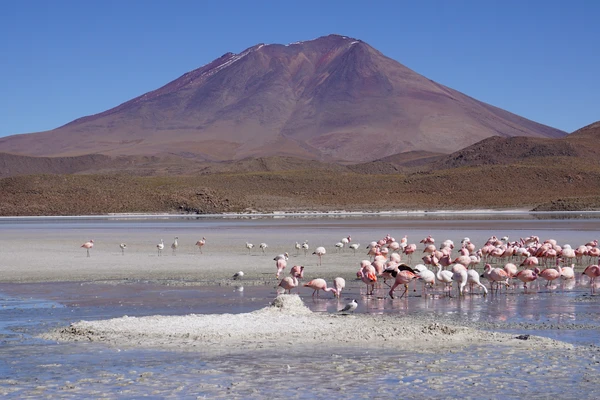
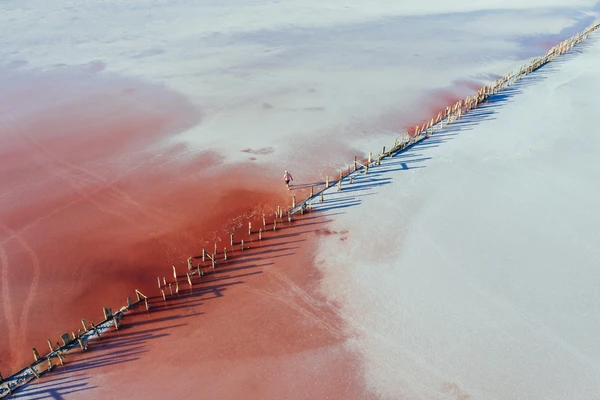
Al Wathba Salt Lake turns pink. Not slightly pink, not pinkish in certain light. Genuinely, unmistakably, strikingly pink, from October through to March when the water levels are right and the microalgae are dense. And from November to March, hundreds of greater flamingos feed in the shallows, their reflections doubling in the still water below them. It is one of the most beautiful natural sights in the UAE and almost no one knows it exists.
The Fossil Dunes, twenty minutes further south, are something else entirely. They are ancient sand dunes that have turned to stone over thousands of years. Walking among them, you understand that the desert you are standing in is not the same desert that was here before. The geology moves slowly enough that you can trace it with your hands.
Al Wathba Salt Lake: The Pink Lake and the Flamingos
Al Wathba Salt Lake is a natural hypersaline lake in the eastern desert of Abu Dhabi emirate, south of the Al Wathba Wetland Reserve. Hypersaline means saltier than seawater, significantly so. The extreme salinity creates conditions where very few organisms survive and those that do are highly visible against the pale, mineral-rich water.
Why the Water Turns Pink
The pink colour comes from Dunaliella salina, a single-celled microalgae that thrives in highly saline, sunlit water. When salt concentrations rise and temperatures are warm, the algae produces a red carotenoid pigment as a survival response. The pigment accumulates in the water and turns it pink, then deeper rose, then almost red in extreme conditions. The same algae is what flamingos feed on across saline lakes worldwide. Their own pink feather colouring comes directly from the carotenoids in their diet.
The Flamingo Season
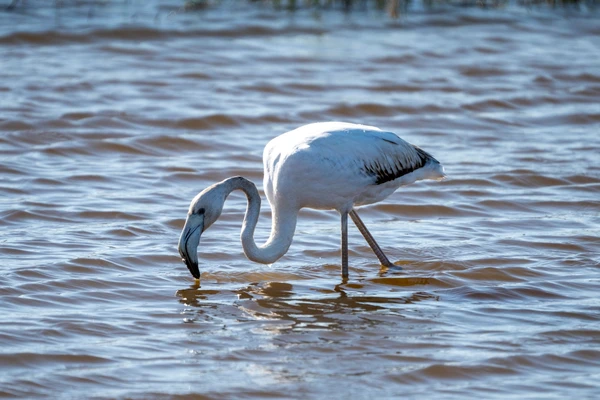
Greater flamingos are migratory, moving between breeding colonies in Iran and wintering areas across the Arabian Gulf and the Indian subcontinent. Al Wathba is one of their regular winter stops. The birds arrive in November, build to peak numbers through December and January, and begin departing in February. By April most have gone.
| Month | Flamingo Numbers | Lake Colour | Temperature (daytime) | Visit Rating |
|---|---|---|---|---|
| October | Very few, early arrivals | White to pale pink | 30 to 38°C | Marginal |
| November | Increasing, hundreds arriving | Pale pink | 24 to 32°C | Good |
| December | Peak, hundreds to thousands | Pink | 18 to 26°C | Excellent |
| January | Peak numbers | Deep pink | 17 to 25°C | Excellent |
| February | Still strong, beginning to depart | Pink | 20 to 28°C | Very good |
| March | Reduced, most departing | Pale pink | 24 to 32°C | Moderate |
| April to September | Very few or absent | White or dry | 32 to 45°C | Not recommended |
Photography at Al Wathba Salt Lake
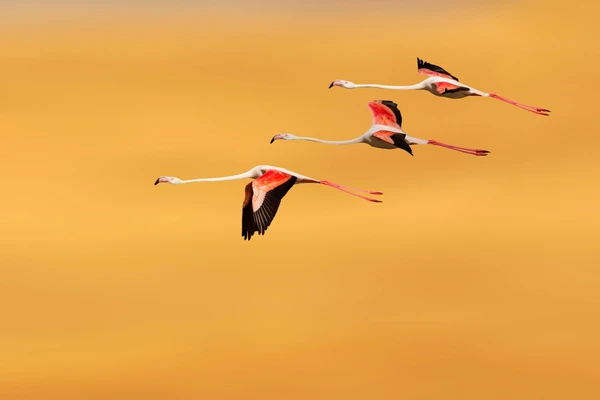
This is one of the finest wildlife photography locations in the UAE, almost entirely because so few people know about it. The best conditions are at sunrise in December or January: the pink water reflecting an orange and gold sky, the flamingos active and feeding, the air still cold enough that there is no heat shimmer. A telephoto lens of at least 200mm is needed to get frame-filling shots of the birds from the accessible shoreline. A 400mm or 500mm lens gives you the kind of images that look genuinely professional.
How to approach without disturbing the birds
Park your vehicle well back from the waterline, at least 100 metres. Walk slowly and steadily rather than making sudden movements. Stop frequently. The flamingos will tolerate a calm presence at a reasonable distance but will take flight if you approach quickly or make noise. If they lift from the water, stop moving and wait. They will usually settle again within a few minutes if you stay calm and still.
The Al Wathba Fossil Dunes
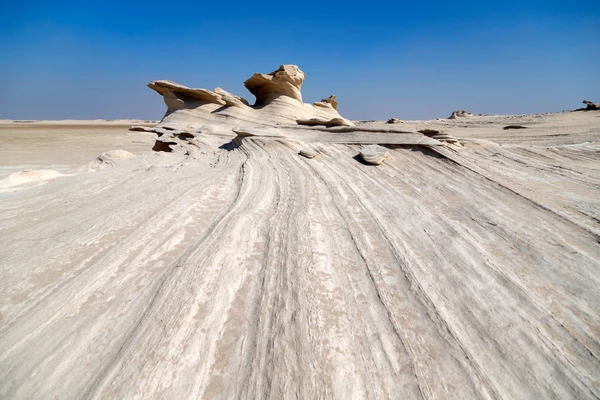
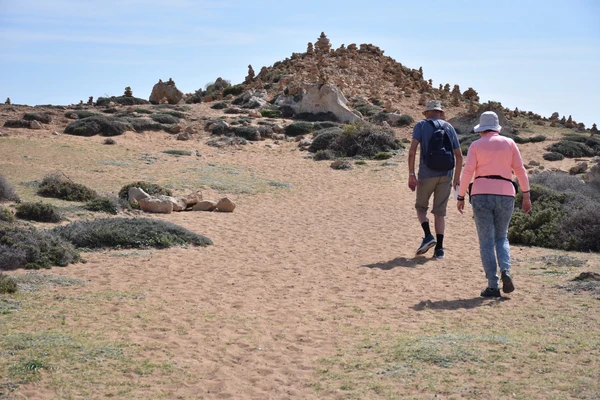
Twenty minutes south of the salt lake, the Fossil Dunes are one of the strangest landscapes in the Arabian Peninsula. The name tells you everything and nothing simultaneously. These are dunes. They are also stone.
How They Formed
During a more humid period in the region's geological past, rainfall percolated through sand dunes and dissolved the calcium carbonate naturally present in the grains. As the climate dried again over thousands of years, the dissolved calcium carbonate recrystallised around the sand grains, effectively gluing them together into solid rock. The process happened slowly enough that the rock retained the exact shape of the original dunes: the curved slip faces, the rippled windward slopes, the sharp crests. The result is a landscape of stone sculptures in dune shapes, frozen in mid-movement, exactly as they were thousands of years ago.
Geologically, the formation is called aeolianite or aeolian calcarenite. In common terms it is a fossilised dune field. There are similar formations in other parts of the world but the scale and accessibility of the Al Wathba examples make them genuinely significant. Most visitors who come here stand among the formations for a long time, which is the right response.
What to Look For
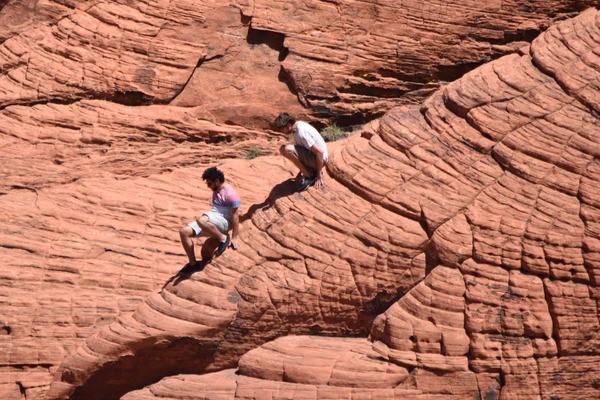
The most striking feature is the layering visible on the cut faces of the rock. Each layer represents a distinct period of dune deposition: you can read the wind direction from the angle of the strata and trace periods of more and less intense dune movement from the layer thicknesses. Some formations show clear evidence of multiple generations of dune activity, with older cemented layers overlain by newer ones that have since also cemented.
Look also at the surface textures. The windward faces are smooth from erosion. The sheltered lee faces show more detail, including occasional surface pits where individual grains have been dissolved out. Touch the rock. It is softer than it looks, particularly on the sheltered faces, and has a slightly granular quality under the fingers that reminds you it was once loose sand.
Practical visiting notes for the Fossil Dunes
- The main formations are visible from the access track without requiring 4x4 driving
- No entry fee and no managed visitor facilities on site
- Bring water, sun protection and sturdy shoes with grip
- The terrain around the formations is uneven limestone and soft sand in equal measure
- Morning visits are cooler and give better photographic light on the east-facing rock faces
- Do not chip or remove rock fragments. The formations are a geological heritage site.
Getting There: Practical Information
Combining Both Sites in One Morning
Al Wathba Salt Lake and the Fossil Dunes are 20 minutes apart by road and work perfectly as a combined morning visit. The sequence that works best is the salt lake first, arriving at sunrise for the flamingos and the morning light on the water, then driving south to the Fossil Dunes as the air warms. The whole visit, unhurried, takes around three hours. You are back in Abu Dhabi city for lunch.
For guests who want to make a full day of the eastern desert, we can arrange the morning nature visit followed by an afternoon in the city, or a combined day that adds the evening evening desert safari in the Al Khatim dune area to the west. The two desert landscapes, the flat saline lake environment and the active rolling dunes, are completely different from one another and the contrast makes for a genuinely varied day.
Other Natural Sites Nearby
Al Wathba Wetland Reserve
Free entryA protected wetland adjacent to the salt lake, managed by the Environment Agency of Abu Dhabi. Walking trails, bird hides and one of the largest flamingo breeding colonies in the region during peak season. More managed than the open lake but excellent for birding.
Al Khatim Desert Dunes
Safari from AED 195The active sand dune area used for our desert safaris, 45 minutes west of Abu Dhabi city. Red-orange dunes, 4x4 dune bashing, camel riding and BBQ dinner. A completely different desert environment to the flat, saline Al Wathba landscape.
Liwa Desert
Day tour from AED 350The tallest dunes in Abu Dhabi emirate, on the northern edge of the Empty Quarter. Three hours south of the city. A completely different scale from anything in the Al Khatim or Al Wathba areas. The most dramatic desert landscape in the UAE.
Al Ain Oasis
Free entryA UNESCO World Heritage site 90 minutes east of Abu Dhabi, combining well with an Al Wathba morning visit. 1,200 hectares of date palms fed by the ancient falaj irrigation system. One of the oldest continuously inhabited places in the Arabian Peninsula.
Want Help Planning a Desert Day in Abu Dhabi?
We arrange morning nature visits, evening safaris and full-day desert combinations. WhatsApp us with your dates.